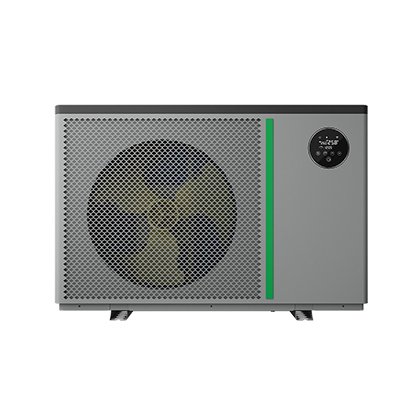
Understanding a heat pump diagram is the best way to grasp how these systems move thermal energy rather than creating it. Whether you are a distributor, an installer, or a buyer, knowing the flow of refrigerant and energy is essential for selecting the right technology.
1. The Core Heat Pump Working Principle
At its heart, every heat pump operates on the Vapor Compression Cycle. Regardless of the source (air, water, or ground), the cycle consists of four main components:
Evaporator (Heat Absorption): The liquid refrigerant absorbs heat from the outside source and turns into a gas.
Compressor (Pressure Increase): The compressor “squeezes” the gas, drastically raising its temperature and pressure.
Condenser (Heat Release): The hot gas releases its heat to the indoor medium (air or water) and reverts to a liquid.
Expansion Valve (Pressure Drop): The liquid refrigerant is cooled as it passes through the valve, returning to the start of the cycle.
2. Air to Water Heat Pump Diagram
This is the most common system for hydronic heating and domestic hot water.
The Diagram Flow: The outdoor unit captures heat from the ambient air. Instead of blowing hot air into the room, the heat is transferred via a Plate Heat Exchanger to a water circuit.
Application: This water then flows to underfloor heating pipes, radiators, or fan coil units.
Key Feature: Often includes a “Buffer Tank” in the diagram to maintain consistent water temperature.
3. Air to Air Heat Pump Diagram
Commonly known as a “Mini-Split” or “Air Conditioner in Reverse.”
The Diagram Flow: The outdoor unit extracts heat from the air. The refrigerant travels through copper piping directly to an indoor air handler.
Application: The indoor fan blows air over the hot refrigerant coils to heat the room directly.
Key Feature: The diagram features a 4-way reversing valve, allowing the unit to switch instantly between heating and cooling modes.
4. Ground Source Heat Pump (GSHP) Diagram
Also known as Geothermal Heat Pumps, these leverage the constant temperature of the earth.
The Diagram Flow: This system adds a “Ground Loop” to the diagram. A mixture of water and antifreeze circulates through pipes buried underground (horizontal or vertical).
Application: The ground loop absorbs the earth’s natural heat and brings it to the heat pump’s evaporator.
Key Feature: High efficiency (COP) because the ground stays at a stable temperature (approx. 10-12°C) year-round.
5. Water Source Heat Pump Diagram
These systems extract heat from a body of water (well, lake, or river).
The Diagram Flow: The diagram shows an “Open Loop” (pumping water directly from a well) or a “Closed Loop” (submerged heat exchanger in a lake).
Application: Ideal for properties near water bodies or with high-yield water wells.
Key Feature: Extremely high heat transfer efficiency since water is more thermally conductive than air or soil.
6.Swimming Pool Heat Pump Diagram (Typical Layout)
A pool heat pump diagram focuses on the Bypass Installation, which is crucial for controlling water flow and protecting the unit.
The Refrigerant Loop:
Evaporator: Absorbs heat from the outside air.
Compressor: Increases refrigerant temperature.
Titanium Heat Exchanger: The “heart” of the unit where heat transfers from hot gas to pool water. Titanium is used to resist chlorine/salt corrosion.
The Water Circuit (Plumbing):
Pump & Filter: Water is cleaned before entering the heat pump.
Bypass Valve System (3-Valve Kit): This is the most important part of the diagram. It allows you to:
*Regulate water flow speed (too fast = inefficient heating).
*Isolate the heat pump for maintenance without stopping the pool filter.
Chlorinator/Salt Cell: Always placed after the heat pump in the diagram to prevent concentrated chemicals from damaging the internal components.
7.Heat Pump Water Heater Diagram (Domestic/Commercial)
This diagram focuses on the Sanitary Water Tank integration and the movement of domestic hot water.
The Refrigerant Loop:
Similar to the pool unit, but the condenser (coil) is often wrapped around the Inner Tank or sits inside a Plate Heat Exchanger for “monobloc” designs.
The Water Circuit:
Cold Water Inlet: Located at the bottom of the tank (where cold water enters).
Hot Water Outlet: Located at the top of the tank (where hot water is drawn for showers/taps).
Recirculation Pump: Often shown in commercial diagrams to ensure instant hot water at the tap.
Expansion Tank & Safety Valve: Vital safety components to handle pressure changes as water heats up.
Integration with Air Source:
The diagram shows air being sucked in from the top or side and discharged as cold air (which can sometimes be used for “free” kitchen cooling).
8. Related Technical Elements
To fully understand a professional heat pump diagram, you should look for these advanced components:
Inverter Drive: Shows the electrical control that allows the compressor to run at variable speeds for energy savings.
EVI (Enhanced Vapor Injection): A secondary circuit in the diagram that improves performance in extreme cold climates (down to -25°C).
Monobloc vs. Split: A Monobloc diagram shows all components in one outdoor box, while a Split diagram shows the refrigerant lines crossing the house wall to an indoor unit.
Looking for Factory-Direct Heat Pump Solutions?
As a leading heat pump manufacturer, KLR Group provide detailed CAD diagrams and technical schematics for all our OEM/ODM products. Whether you need a small heat pump or a large-scale commercial system, our engineering team can provide the specific wiring and plumbing diagrams required for your project.