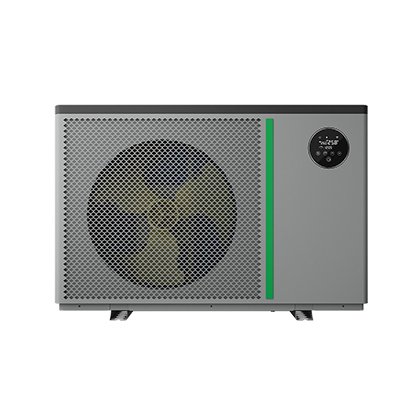
What Is an Air Source Heat Pump? A 2026 B2B Sourcing Guide: R32, R290, DC Inverter & OEM Customization with KLR
As the global energy transition and carbon neutrality goals accelerate, the air source heat pump has become one of the fastest-growing product categories in heating and cooling. For distributors, dealers, engineering contractors, and brand owners, understanding the technical fundamentals, application-specific requirements, and supply chain strategies behind air source heat pumps is essential to capturing this market opportunity.
This article examines air source heat pumps from a B2B sourcing perspective—covering working principles, key applications including domestic hot water, room heating, and pool heating, refrigerant pathways, and practical guidance on partnering with a capable OEM manufacturer in China. KLR Group serves as an illustrative case of a manufacturer equipped to support partners across these dimensions.
Table of Contents
1.What Is an Air Source Heat Pump: From Principle to B2B Value
2.Key Applications: Matching Heat Pump Technology to End-Use Demands
3.R32 vs. R290: Key Considerations for Refrigerant Selection
4.KLR Group as an Illustrative OEM Partner
5.Frequently Asked Questions
6.Summary and Outlook
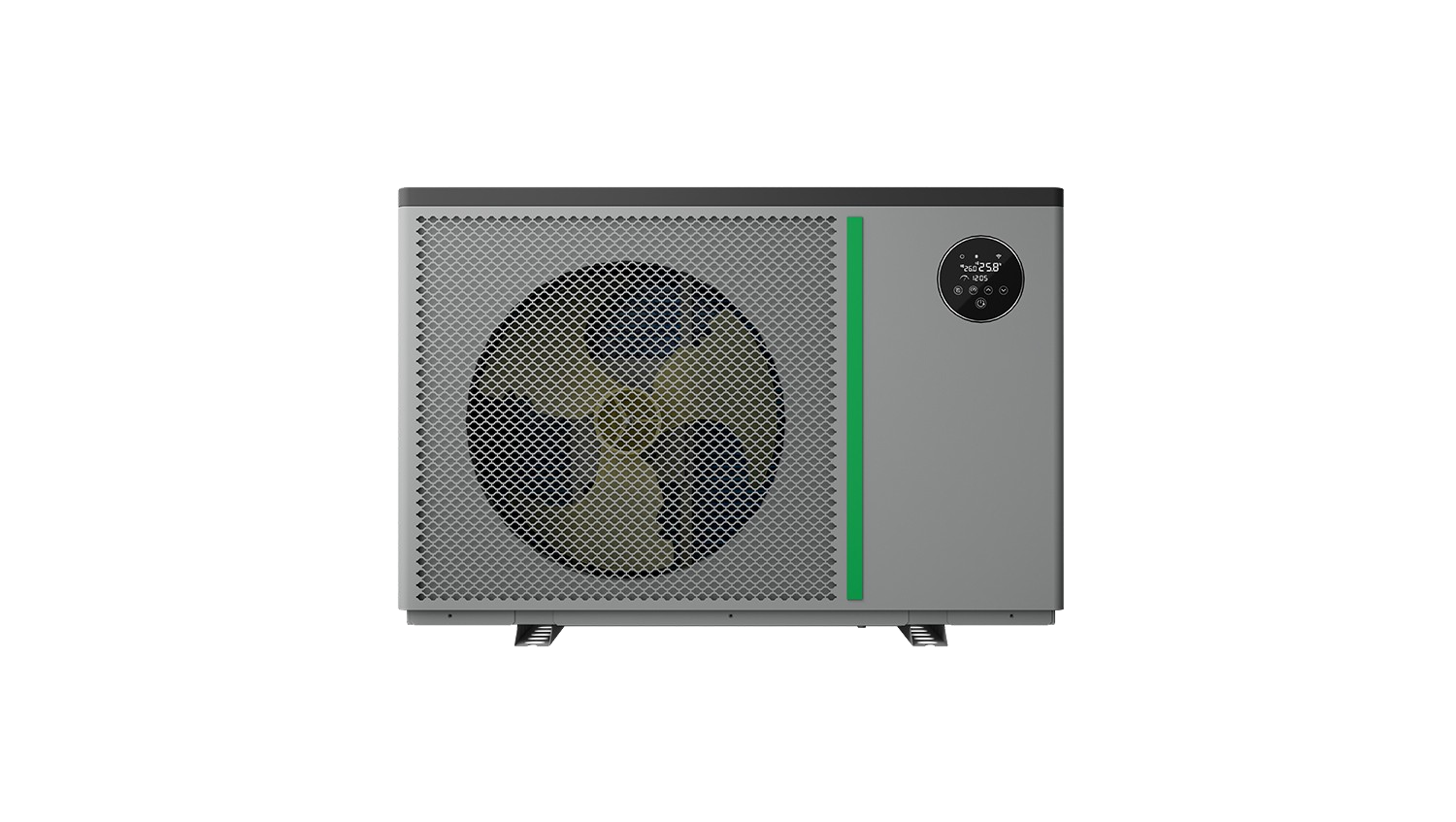
What Is an Air Source Heat Pump: From Principle to B2B Value
An air source heat pump is a system that uses the reverse Carnot cycle to extract low-grade thermal energy from outdoor air and upgrade it into usable high-grade heat. The core process involves four stages: refrigerant absorbs heat from the air and evaporates in the evaporator; the compressor raises the low-pressure vapor to high-temperature, high-pressure gas; the high-temperature refrigerant releases heat into the heating system and condenses into liquid in the condenser; finally, an expansion valve reduces pressure and temperature before the next cycle begins.
The key advantage lies in efficiency: the system consumes only a small amount of electricity to drive the compressor while extracting several times that amount of heat from the air. Modern air source heat pumps achieve a COP (Coefficient of Performance) of around 4.0 at standard rating conditions—meaning 1 kW of electricity produces roughly 4 kW of heat. Systems can operate continuously in environments as low as -15°C or even -20°C, dispelling the misconception that heat pumps are only suitable for mild climates.
For B2B customers, the commercial value manifests on three levels: product line competitiveness—the ability to offer integrated heating, cooling, and domestic hot water solutions; regulatory tailwinds—global policies phasing out fossil fuel boilers create sustained demand; and margin potential—high-efficiency products command premiums while modular designs reduce installation and maintenance costs. KLR Group addresses this market with a full product matrix spanning residential to commercial applications, including dedicated series for cold-climate heating, pool heating, domestic hot water, and heat recovery systems.
Key Applications: Matching Heat Pump Technology to End-Use Demands
Different applications impose distinct technical requirements on air source heat pump systems. Understanding these differences is essential for B2B customers when selecting products and positioning them to end users.
Domestic Hot Water (DHW)
Heat pump water heaters represent one of the most mature and widely adopted applications. The technology is particularly suited to sites with poor solar gain and is comparable in annual efficiency to solar water heating. Key technical considerations include storage tank capacity, recovery rate, and outlet water temperature.
KLR offers both split system and all-in-one heat pump water heaters. Split systems separate the outdoor unit from the indoor water tank, allowing flexible installation in cold climates or basements while minimizing indoor space requirements. The company accommodates tank sizes of 150L, 200L, and 300L, with refrigerant options including R410A, R134a, and R290. For partners serving hotels, schools, and large residential communities, KLR’s commercial hot water series employs titanium heat exchangers and tanks up to 200L.
Room Heating (Space Heating)
Space heating is the largest market segment for air source heat pumps, particularly in Europe where fossil fuel boiler phase-outs are driving rapid adoption. The critical technical challenge is maintaining heating capacity as outdoor temperatures drop—standard heat pumps experience significant capacity loss in cold conditions.
KLR’s product portfolio addresses this directly. The KLR-EDM Series operates at temperatures as low as -25°C with outlet water temperatures up to 75°C, making it suitable for harsh winters and high-demand applications. For more demanding industrial and commercial heating requirements, the Titan Inverter EVI series delivers 100% heating output at -25°C without backup electric strips, validated at Canada’s Northern Research Institute Arctic Chamber. This performance is achieved through Enhanced Vapor Injection (EVI) technology and cascaded inverter compressors.
Swimming Pool Heating
Pool heating presents unique challenges: water chemistry (salt or chlorine), outdoor exposure, and the need for both heating and cooling depending on season. Heat pumps for pool applications must resist corrosion while delivering high seasonal efficiency.
KLR’s KLR-POOL Series features anti-corrosion titanium tubes designed for stable operation from -15°C to 53°C. The Guard Inverter Pool Heat Pump takes durability further with SaltShield™ triple-layer nano-ceramic coating for 10x industry corrosion resistance, tested in coastal resort environments including Dubai’s Burj Al Arab. For partners targeting commercial pools and resorts, the Guard Series offers COP ratings up to 14.5 and ambient operating range of -15°C to 55°C.
Simultaneous Heating/Cooling and Heat Recovery
Modern heat pumps increasingly serve multiple demands in a single cycle. KLR’s heat recovery heat pumps can simultaneously produce chilled water for cooling and free hot water up to 70°C, maximizing energy utilization for buildings with concurrent heating and cooling needs—such as hotels, hospitals, and commercial complexes.
R32 vs. R290: Key Considerations for Refrigerant Selection
Refrigerant choice directly affects product efficiency, safety compliance, and market access. The two mainstream pathways are R32 (GWP 675, A2L mildly flammable) and R290 (GWP 3, A3 highly flammable). The table below summarizes the key differences for B2B sourcing decisions.
R32 vs. R290 Comparison Table
| Parameter | R32 | R290 |
| Chemical name | Difluoromethane | Propane |
| ASHRAE safety class | A2L (mildly flammable) | A3 (highly flammable) |
| GWP (100-year) | 675 | 3 |
| ODP | 0 | 0 |
| Volumetric capacity | High | Moderate |
| System charge | Smaller charge for same capacity | Larger charge for same capacity |
| Operating pressure | Higher | Lower |
| Efficiency in mild climate | Good | Excellent (often higher COP) |
| Efficiency in high ambient | Stable | Good |
| Pipe diameter | Smaller (lower material cost) | Larger |
| Sealing requirements | Moderate | Relatively lenient |
| Safety requirements | Charge limits, leak detection | Strict charge limits, ventilation, leak detection |
| Regulatory outlook (EU F-Gas) | Transitional | Preferred long-term |
| Typical applications | Residential heating, commercial HVAC | Residential heating, DHW, small commercial |
| KLR offering | R32 heat pumps with EVI cold-climate performance | R290 series: GWP=3, heating down to -35°C, 75°C output |
Selection Guidance
For residential products exported to Europe, R290 offers forward-looking compliance as F-Gas regulations tighten. For commercial or high-charge systems, R32’s A2L classification may offer advantages in compliance cost. A capable manufacturer will support both pathways.
KLR Group’s product portfolio demonstrates this dual-pathway readiness. The company offers R32 heat pumps with enhanced vapor injection for cold-climate performance. For partners prioritizing maximum environmental performance, KLR’s R290 series delivers GWP=3 with heating operation down to -25°C and 75°C output temperature. This refrigerant-agnostic approach allows B2B customers to align product selection with target market regulations and customer preferences.
KLR Group as an Illustrative OEM Partner
KLR Group represents a manufacturer profile aligned with these B2B requirements. Headquartered in Foshan, Guangdong, KLR operates a 20,000+ m² production facility with a focus on heat pump technology for over 20 years. The company positions itself as a global heat pump OEM/ODM intelligent manufacturing expert and deep customization solution provider.
Customization capability: KLR offers end-to-end OEM/ODM services covering appearance design, labeling, packaging, refrigerant selection, power supply configuration, and performance parameters tailored to specific markets. For split system water heaters, tank sizes and refrigerant options can be customized to local requirements. For pool heat pumps, the company accommodates cabinet color preferences and configuration variations.
Technical depth: KLR has secured 200+ domestic and foreign patents and invests over 10% of annual revenue in R&D. Core technologies include full DC inverter systems, EVI (Enhanced Vapor Injection) for low-temperature operation, and intelligent IoT control. The company operates a national-level heat pump laboratory to support ongoing product development.
Compliance and quality: Products carry 50+ international certifications including CE, CB, ISO9001, ISO14001, and ERP A+++ ratings. The company reports a <0.5% field failure rate and a 15-year design life for its heat pump products. This quality track record provides B2B partners with confidence in product reliability and reduced warranty exposure.
Global footprint: KLR exports to 80+ countries, including Germany, Poland, Sweden, Norway, France, Belgium, and the UK. The company has established 400+ global OEM/ODM partnerships and exports over 50,000 heat pumps annually. For distributors and brand owners, this global experience suggests familiarity with diverse market requirements and regulatory environments.
After-sales and support: KLR offers 24/7 technical support and comprehensive warranty coverage. The company’s field-replaceable module design reduces downtime and simplifies maintenance for partners’ end customers.
Matching Manufacturer to Business Model
Different B2B customers should prioritize different manufacturer attributes:
Engineering contractors should prioritize bulk delivery stability, technical documentation completeness, and product reliability in demanding applications. KLR’s industrial-grade Titan series, with dual rotary compressors and predictive analytics, addresses this need.
Brand owners should focus on customization depth, IP protection, and the manufacturer’s ability to execute on private-label requirements. KLR’s end-to-end customization and deep OEM service model supports this objective.
Distributors need product line breadth, supplier responsiveness, and cost competitiveness. KLR’s portfolio spans residential and commercial heat pumps, pool heaters, water heaters, and heat recovery systems, with competitive factory pricing for bulk orders.
📩 Ready to Launch Your Own Heat Pump Brand?
Whether you are a distributor building a product line, a brand owner seeking private-label manufacturing, or an engineering contractor sourcing reliable cold-climate heat pumps, KLR Group can support your project from design to delivery.
What you get when you partner with KLR:
Free OEM/ODM solution consultation and product selection support
Custom refrigerant, capacity, enclosure, and control interface options
Certified products (CE, CB, ISO, ERP A+++) ready for your target market
24/7 technical hotline and after-sales support
Competitive factory pricing for bulk orders
Get in touch today:
Phone / WhatsApp: +86 134 2453 1875 (24/7 technical hotline)
👉 Send us your target specifications and market requirements—our engineering team will respond with a customized proposal within 24 hours.
Frequently Asked Questions
What is an air source heat pump and how does it work?
An air source heat pump is a device that extracts heat from outdoor air and transfers it indoors for space heating, domestic hot water, or pool heating. It works on the reverse Carnot cycle: refrigerant absorbs heat from the air in the evaporator, the compressor raises the refrigerant to a high temperature and pressure, heat is released in the condenser, and an expansion valve completes the cycle. Because it moves heat rather than generating it, a heat pump can deliver 3–4 kW of heat for every 1 kW of electricity consumed.
Can an air source heat pump work in cold climates?
Yes. Modern cold-climate heat pumps use technologies such as Enhanced Vapor Injection (EVI) and DC inverter compressors to maintain capacity at low ambient temperatures. KLR’s KLR-Home Series operates down to -25°C with outlet water up to 75°C, while the Titan Inverter EVI series delivers 100% heating output at -25°C without backup electric strips.
What is the difference between R32 and R290 heat pumps?
R32 is an A2L mildly flammable refrigerant with a GWP of 675, offering high volumetric capacity and compact system design. R290 is an A3 highly flammable refrigerant with a GWP of just 3, delivering excellent environmental performance and high efficiency in mild climates. R290 requires stricter safety measures, while R32 offers a balance between compliance cost and performance. See the full comparison table above.
Which refrigerant should I choose for the European market?
For residential products exported to Europe, R290 offers forward-looking compliance as EU F-Gas regulations tighten and GWP limits decline. For commercial or high-charge systems, R32’s A2L classification may offer advantages in compliance cost. KLR supports both pathways, allowing you to align product selection with your target market.
Can I get a customized air source heat pump with my own brand?
Yes. KLR Group provides full OEM/ODM services, including appearance design, labeling, packaging, refrigerant selection, power supply configuration, and performance parameters tailored to your market. With 400+ global OEM/ODM partnerships, KLR supports distributors, brand owners, and engineering contractors in launching private-label heat pump products.
What applications can air source heat pumps serve?
Air source heat pumps serve four main applications: domestic hot water (split and all-in-one systems with 150L–300L tanks), room heating (residential and commercial space heating, down to -35°C), swimming pool heating (corrosion-resistant titanium models for residential and commercial pools), and simultaneous heating/cooling with heat recovery (for hotels, hospitals, and commercial buildings).
How do I choose an air source heat pump manufacturer in China?
Evaluate manufacturers on five dimensions: customization flexibility (OEM/ODM capability), technical depth (in-house controller and inverter development), compliance completeness (CE, CB, ISO, ERP certifications), production capacity and lead time, and after-sales support. KLR Group operates a 20,000+ m² facility in Foshan, holds 200+ patents, and carries 50+ international certifications.
What is the warranty and after-sales support for KLR heat pumps?
KLR offers comprehensive warranty coverage and 24/7 technical support. The company’s field-replaceable module design reduces downtime and simplifies maintenance. For specific warranty terms by product line, contact KLR directly at klrheatpump@163.com.
Summary and Outlook
The technical maturity of air source heat pumps now supports large-scale replacement in mainstream heating markets. For B2B customers, the key decision points remain: selecting a manufacturer with full-system DC Inverter capability, determining the R32 or R290 pathway based on target market regulations, and finding a China factory that can provide flexible OEM customization and stable delivery across diverse applications—whether domestic hot water, room heating, or pool heating.
KLR Group exemplifies a manufacturer equipped to serve as a long-term partner across these dimensions—combining refrigerant flexibility, full-inverter technology, extensive certifications, and proven customization capability. As global efficiency standards tighten and refrigerant regulations evolve, partnerships with manufacturers possessing both technical depth and compliance infrastructure will become decisive.
This article is based on 2026 industry technical data and B2B sourcing practices, intended as a reference for distributors, dealers, engineering contractors, and brand owners in their procurement and product decisions. Product specifications and certifications referenced are sourced from publicly available KLR Group materials.