While most homeowners are familiar with conventional electric or gas water heaters due to their lower upfront costs and widespread accessibility, Heat Pump Water Heaters (HPWHs) remain a relatively niche choice, primarily catering to the mid-to-high-end market. However, driven by a global shift toward energy efficiency and environmental sustainability, HPWHs have gained significant market momentum over the past decade.
In this article, we provide an in-depth analysis of heat pump water heaters—covering their definition, core advantages, working principles, various types, and pricing structures—to ensure you are fully informed before making an investment.

What Is Heat Pump Water Heater
The operational concept of a heat pump water heater can be simply understood as the inverse application of a refrigerator.
While a refrigerator extracts heat from an enclosed space to provide cooling, a heat pump water heater operates by absorbing ambient heat and transferring it into a storage tank, efficiently heating the water for domestic use (domestic hot water supply).
Furthermore, while compact units serve residential needs, large-scale systems (large-scale units) are available and widely utilized for commercial hot water projects.
Heat Pump Water Heater How it works
A Heat Pump Water Heater (HPWH) is a highly efficient, energy-saving, and environmentally friendly device that heats water by absorbing “free” heat from the ambient air through heat conversion and transfer. Its heating efficiency is typically 3 to 4 times that of a conventional electric resistance water heater.
The operational principle is as follows:
Electricity is used to power the compressor and other electrical components. The compressor discharges high-temperature, high-pressure gaseous refrigerant into the condenser (located within or around the water tank). During this stage, the thermal energy from the hot gas is transferred to the water.
As the refrigerant loses heat and cools down, it passes through an expansion valve, which releases the pressure. The low-temperature refrigerant then enters the evaporator. Simultaneously, a fan continuously draws ambient air across the evaporator coils, where the refrigerant absorbs heat from the air and evaporates. This warmed refrigerant then returns to the compressor to begin the cycle again. This continuous thermodynamic cycle efficiently heats the water in the tank to the desired temperature.
Heat Pump Water Heater Diagram

Heat Pump Water Heater Benefits
High Performance
COP reach 4,It can help users save a lot of electricity cost
Easy to Install
the unit is essentially ‘plug-and-play’—simply connect it to the water supply and power source to begin operation.
Safe
Equipped with leakage protection and complete physical separation of water and electricity, this system effectively eliminates the fatal safety hazards associated with traditional electric water heaters.
Eco-Friendly
Using environmentally friendly refrigerants such as R134a, R290, R513a, which have no combustion or exhaust emissions, it is very environmentally friendly
Smart Control
The simple control panel and mobile app WIFI control system make it easy for users to control and check the operation of the unit
Subsidy
Due to the high efficiency, energy conservation, and environmental protection of heat pump water heaters, many countries have provided tax credit support, allowing users to reduce a lot of expenses
Heat Pump Water Heater Types
There have many types of heat pump water heaters for choice in the market, like all in one and system, inverter or On/off models, indoor or outdoor installation models, you will know more detail from here.
Classify by installation types
All In One Type
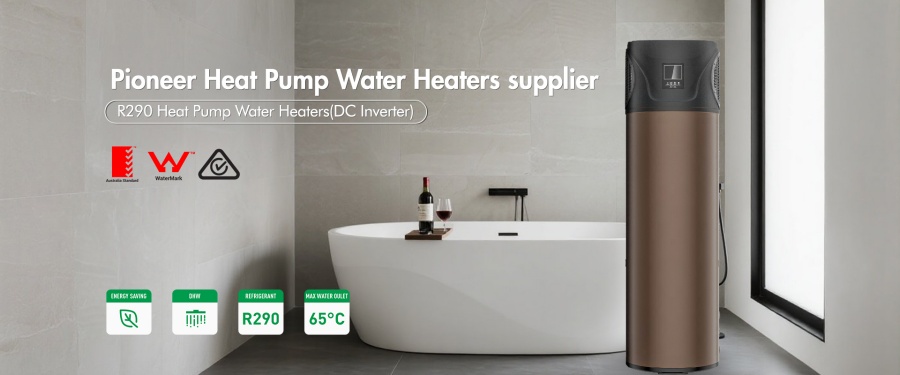
The heat pump and water tank are integrated all in one, greatly reducing the installation space. It has built-in back up electric heater, which can still provide sufficient hot water supply in low temperature or high demand for hot water
Split System
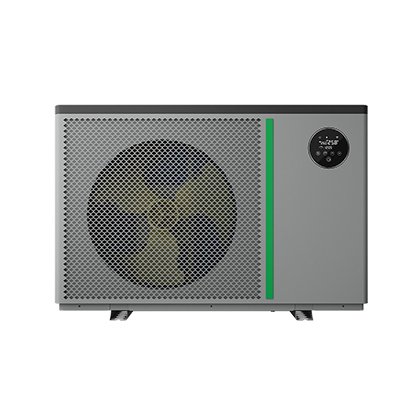
Split heat pump water heater means the heat pump and water tank are separated into two parts for flexible installation, no space limited.
Classify by technology
Domestic Use
Heating capacity ranging from 1kW to approximately 10kW, these units are specifically engineered for residential hot water applications, making them an ideal solution for small-scale residential house, apartments, and luxury villas.
Commercial Use
heating capacities ranging from 15kW to approximately 200kW, these high-capacity units are engineered for large-scale buildings and centralized hot water systems. They provide a reliable solution for institutional and commercial sectors, including schools, hospitals, shopping malls, factories, and hotels.
Classify by Technology
Inverter
Our advanced, high-efficiency heat pump technology significantly lowers energy consumption, enabling customers to minimize operational costs while enjoying a more comfortable and consistent hot water experience.
ON/OFF
Characterized by high reliability and stability, the technology has undergone extensive validation in the market over many years. Furthermore, the system is designed for straightforward maintenance.
Classify by Heat Source
Grouce Source or Water Source
By absorbing underground or water energy to heat the water in the water tank and provide domestic hot water
Air Source
Air source heat pump water heater by absorbing energy from the air to heat hot water, a continuous supply of hot water is provided
Heat Pump Water HeaterInstallation And Maintenance
Proper installation and regular maintenance are critical factors when purchasing and operating a heat pump water heater (HPWH). Let’s explore the essential requirements for a successful setup:
Installation
Installation Space and Ventilation
Ensure sufficient clearance around the unit, particularly near the air inlets and outlets, to maintain optimal airflow and heat exchange efficiency.
Installation Location
Priority should be given to spaces like garages, basements, or covered balconies. Note that the unit discharges cool, dehumidified air during operation.
Drainage and Leak Prevention
Install a dedicated condensate drain line. It is highly recommended to place a drain pan (catch pan) beneath the unit to protect against potential leaks.
Flexible Plumbing
Use flexible piping/connectors for water lines to minimize the transmission of operational vibrations to the building structure.
Electrical Connection
This must be performed by a certified professional. All wiring must strictly adhere to the manufacturer’s specifications and local electrical codes.
Ducting Installation
Ducting can be integrated to channel the “free” cool exhaust air to specific areas requiring cooling, enhancing the overall utility of the system
Maintenance
Key maintenance points to consider
Regular Filter Cleaning
Clean the air filters regularly to prevent dust buildup, which can obstruct airflow and lead to decreased energy efficiency.
Condensate Drain Inspection
Inspect the condensate drain line at least once a year to ensure it is clear of obstructions and draining properly.
T&P Valve Testing
Manually test the Temperature and Pressure (T&P) relief valve monthly or quarterly. Briefly lift the lever to ensure hot water flows out and the valve resets correctly, confirming it is not stuck.
Heat Pump Water Heater Manufacturers
Haier
As a global pioneer in the Chinese home appliance industry, Haier Group was established in 1984. Haier maintains a dominant market share in the air-source heat pump sector and has been ranked as the world’s No.1 major appliances brand in retail volume for 16 consecutive years
GREE
A recognized industry leader, Gree is a dominant China domestic brand and a major global exporter, with China supplying 60% of the world’s heat pump capacity. Backed by numerous international certifications, Gree excels in comprehensive R&D, particularly in ultra-low temperature and high-temperature industrial heat pump technologies.
Midea
Midea is a world-renowned air conditioning manufacturer, with heat pumps serving as one of its core product lines. Leveraging its robust supply chain and R&D capabilities, Midea has become one of the largest heat pump producers globally.
Heat Pump Water Heater Brands
Rheem
A dominant force in both global and North American markets, the brand stands as a premier leader in North America. Offering an extensive and comprehensive product portfolio, the company is widely recognized for its exceptional reliability, which has been rigorously proven and trusted across the industry.
Viessmann
Headquartered in Allendorf, Germany, and established in 1917, the company has evolved over a century into a world-leading manufacturer of heating, industrial, and refrigeration systems. Renowned for its excellence and strong market reputation, the company provides comprehensive integrated energy solutions for global clients.
Bosch
Founded in Stuttgart, Germany, in 1886, the company is a world-leading provider of technology and services. Heat pump technology represents one of its core business segments, offering premium product positioning that integrates space heating, cooling, domestic hot water, and air purification into a comprehensive, ‘whole-home’ comfort solution.
Stiebel Eltron
A century-old, family-owned German enterprise, the company was founded in Berlin in 1924 by Dr. Theodor Stiebel. As a fiercely independent family business, it specializes in providing advanced solutions for electric heating, cooling, ventilation, and hot water systems.
A.O. Smith
As a publicly traded U.S. corporation with a legacy spanning nearly 150 years, the company provides comprehensive solutions across heating, cooling, HVAC systems, and new energy equipment.
Daikin
As a world-renowned global brand from Japan, they are not only a powerhouse in the global HVAC industry but also a pioneer in heat pump technology. They offer a diverse portfolio of heat pump series, providing comprehensive solutions for domestic hot water, space heating, and cooling.
Heat Pump Water Heater VS Gas
Cost
If local electricity rates are relatively low and you are prepared to invest in a higher upfront cost, a heat pump water heater is an exceptionally suitable long-term choice. Conversely, if local natural gas prices are more economical and the initial purchase price is a primary concern, a gas water heater remains the optimal selection.
Installation Condition
Installing a heat pump water heater requires sufficient space (such as a basement or garage) to ensure adequate airflow. Additionally, the installation site must be able to accommodate the slight operational noise and the cool exhaust air generated by the unit.
For gas water heaters, a reliable gas supply line must be accessible. The installation must strictly adhere to local safety codes and regulations to ensure proper ventilation and operation
Climate affect
In warm climates and areas with hot summers, heat pumps operate with exceptional energy efficiency. However, in regions with extremely cold winters, the heating capacity and efficiency of the heat pump will significantly degrade. In such cases, auxiliary electric heaters must be activated to ensure a sufficient supply of hot water. In contrast, gas water heaters remain unaffected by ambient temperature fluctuations.
Government Subsidy
Heat pumps are a more environmentally friendly solution, leading many countries and regions to implement financial incentives, such as purchase subsidies and tax credits, to encourage the transition to this technology. For instance, the United States offers a federal tax credit of up to $2,000 for qualifying heat pump water heaters. Similar supportive policies are also active in countries like Australia, South Africa, the Netherlands, and Germany. In contrast, gas water heaters rarely qualify for such significant government incentives.
Heat Pump Water Heater Pros and Cons
Pros
Energy Efficient / High Efficiency Performance:
Saves up to 70% on electricity consumption compared to conventional electric resistance water heaters.
Eco-Friendly / Environmentally Sustainable:
Utilizes eco-friendly refrigerants.
Zero exhaust emissions (no waste gas) and zero wastewater discharge, making the system highly favorable for the environment.
Smart Control / Intelligent Operation:
Equipped with an intuitive smart control panel.
Full control via mobile Wi-Fi App for remote management and scheduling.
Integrated Cooling (Free Dehumidification):
While heating water, the heat pump provides a source of “free” cool exhaust air.
This byproduct can be ducted to areas requiring cooling (e.g., basements, garages) and helps reduce humidity levels in the surrounding space.
Cons
Higher Initial Investment
The upfront purchase price of a heat pump water heater is typically 2 to 3 times that of a conventional electric resistance water heater.
Specific Installation Requirements
Space & Ventilation: Installation requires sufficient clearance and excellent airflow.
Configuration Needs: For all-in-one (monobloc) units, consider if ductwork is needed for air intake/exhaust. For split systems, refrigerant piping must be carefully planned.
Professional Setup: Professional installation is essential to ensure the system operates at its peak performance and efficiency.
Impact of Ambient Temperature
Efficiency significantly drops when the ambient temperature falls below 0°C (32°F).
During extreme cold, the system requires auxiliary electric heating (backup heating elements) to maintain an adequate supply of hot water.
Heat Pump Water Heater Cost
The typical price range for high-quality heat pump water heaters (HPWHs) from top-tier global brands and manufacturers generally falls between $1,200 and $3,000 USD for common capacities, such as 50-gallon and 80-gallon models.
However, the following factors must also be considered as they influence the final purchase price:
Installation cost
Before purchasing, always clarify whether installation is included. Many sellers quote the ‘unit only’ price; since installation is a significant part of the total cost, it must be factored into your budget. The standard installation labor cost is generally between $600 and $2000 USD
Delivery
Most heat pump purchases now include home delivery, but some sellers may still charge separately for shipping and installation. It is best to confirm beforehand whether these costs are included in the final price.
Warranty
Standard warranty coverage is typically included in the base price. However, opting for an extended warranty will result in additional costs.
Brands
There are significant differences in prices between different brands and manufacturers, so it is necessary to choose a reputable brand to ensure good maintenance services in the future
Retrofit
If a replacement is required, the removal of your old unit and any needed plumbing re-configuration will be part of the added labor costs.
Conclusion
Heat pump water heater is advanced hot water heating equipment, It’s high performance, energy saving and eco-friendly. It is the best option for hot water system for house or commercial use. KLR is a professional Chinese heat pump manufacturer over 20 years experience. Offering premium OEM/ODM service to oversea wholesaler clients and brand partners. KLR can custom heat pump water heater according to your demand to suit to your market, support your business grow and expand market share. Please contact us for further cooperation