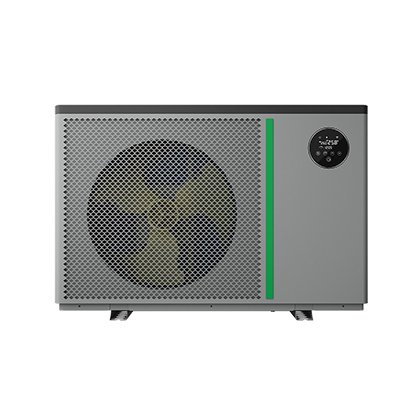
Commercial Air Source Heat Pump Water Heater Manufacturers in the UK: A Practical Guide for 2026 (with OEM Partner Spotlight: KLR)
As UK commercial buildings face tightening energy efficiency standards and net-zero targets, decarbonising hot water systems has moved from optional to essential. For hotels, leisure centres, public buildings and multi-occupancy commercial projects, choosing a manufacturer that understands British regulations and building realities is often the difference between a successful retrofit and a costly underperformance.
This guide examines the policy drivers, technical selection criteria and manufacturer capabilities that matter most to commercial decision-makers in 2026—including a closer look at KLR Group, an OEM/custom heat pump manufacturer supplying advanced R290 inverter technology to brand owners and distributors worldwide.
Why Commercial Heat Pump Water Heaters Are Becoming Standard in UK Buildings
The UK government has placed heat pump deployment at the centre of its clean heat strategy. Commercial, public and voluntary sector buildings can access £7,500 through the Boiler Upgrade Scheme for heat pump installations. The scheme covers domestic properties and small non-domestic buildings up to 45 kW of thermal capacity, with funding running to 2029/30 under the Warm Homes Plan.
For commercial hot water loads, the pressure is particularly acute. Traditional gas-fired water heaters may have lower upfront costs, but their operational carbon footprint and future compliance risks continue to rise. Commercial air source heat pump water heaters offer a different proposition: they transfer heat rather than burn fossil fuels, and with the UK grid’s carbon intensity declining, their lifecycle emissions are significantly lower than gas alternatives.
Technical maturity has also improved. Current commercial models can reliably achieve 70°C to 75°C flow temperatures, sufficient for hotel guest bathrooms, commercial kitchen sanitation and existing heating distribution systems. This means many existing buildings can undergo low-carbon hot water retrofits without wholesale replacement of terminal units.
Choosing a UK-Focused Manufacturer: What Actually Matters
The UK commercial heat pump market includes European brands, Asian manufacturers and British-based operations. While each has strengths, manufacturers with deep UK market familiarity—whether locally based or export-focused partners with UK compliance experience—offer distinct advantages for commercial clients prioritising project certainty and aftercare.
Familiarity with British building standards. Commercial heat pump systems are not plug-and-play. Performance depends heavily on system design: heat loss calculations, buffer vessel sizing, hydraulic distribution and control integration. The MCS certification framework, particularly MIS 3005-D (Design) and MIS 3005-I (Installation), sets clear standards for heat pump design and installation. Manufacturers supplying the UK market must demonstrate fluency with these requirements, including UKCA marking, ErP compliance and refrigerant handling regulations.
Aftercare response and spare parts availability. When a commercial hot water system goes down, the impact is immediate: hotel occupancy, restaurant operations or public facility availability. Manufacturers with UK distribution infrastructure or dedicated UK technical support have natural advantages in spare parts stock and on-site response times. Hamworthy Heating, part of Groupe Atlantic, operates a UK factory in Hull and provides end-to-end technical support from design to commissioning. This model of direct manufacturer involvement in aftercare is often more reliable in commercial projects than purely distributor-based support.
Practical experience with UK policy tools and grant processes. Commercial heat pump projects involve complex investment decisions. A manufacturer’s ability to provide usable efficiency data, compliance documentation and grant application support directly affects financial feasibility.
Refrigerant transition readiness. The UK commercial heat pump market is accelerating toward R290 (propane). With a GWP of just 3, R290 offers significantly lower climate impact than synthetic refrigerants, and its thermodynamic properties support higher flow temperatures. However, R290 is classified as an A3 refrigerant with high flammability, requiring careful installation and risk assessment. Manufacturers offering R290-capable commercial products are better positioned for long-term F-Gas compliance.
OEM Partner Spotlight: KLR Group and R290 Inverter Technology
For distributors, brand owners and contractors looking to build or expand their own commercial heat pump water heater ranges, KLR Group offers a compelling OEM/custom manufacturing partnership model.
Who KLR Is
KLR Group is a professional heat pump manufacturer based in Foshan, China, with over 20 years of OEM production experience for overseas markets . The company operates five advanced production lines with a daily capacity exceeding 2,000 units, supported by 500+ employees and a 50+ person engineering team . Its products are sold to more than 60 countries, including the UK, and carry certifications covering CE, CB, UKCA, KEYMARK, MCS, ErP and ISO 9001/14001 .
R290 Inverter Technology: What KLR Offers
KLR’s R290 platform is engineered for the performance demands of commercial and residential hot water applications:
Ultra-low GWP refrigerant. R290 (propane) delivers a GWP of just 3—98% lower than conventional refrigerants—with zero ozone depletion potential .
High-temperature output. KLR’s R290 inverter units deliver hot water up to 75°C, making them suitable for commercial sanitary hot water, radiator retrofits and high-temperature process applications .
Full DC inverter with EVI. Enhanced Vapor Injection technology maintains performance in sub-zero conditions, with reliable heating down to -35°C ambient temperature in KLR’s R290 range . Full DC inverter systems deliver up to 30% energy savings compared with conventional fixed-speed units .
Certified efficiency. KLR reports COP up to 4.8 (A7/W35) on its R290 platform, with ErP A+++ ratings and EN14825:2022 certification .
OEM and Custom Capabilities
KLR’s business model is built exclusively for B2B partners—wholesale distributors, installers, system contractors and brand owners. The company states explicitly: “We do not sell directly to end-consumers. Our entire operation is built to protect your margins, secure your territory, and elevate your brand reputation” .
Customisation options include:
Custom enclosures and branding: bespoke sheet metal work, powder-coated finishes, logo placement
Custom control and IoT integration: proprietary control logic flashed onto circuit boards, Modbus/BMS compatibility, custom mobile app integration
Calibrated capacity ranges: from compact 5 kW residential systems to large-scale commercial cascades
Custom hydronic modules: dual-zone heating/cooling configurations for commercial applications
For commercial air source heat pump water heater projects, KLR’s EHP-R290 Inverter Range (scalable 8–30 kW units) is positioned for hotels, campuses and similar commercial hot water loads .
Why UK Partners Might Consider KLR
For UK brand owners or distributors seeking an OEM manufacturing partner with R290 capability, KLR offers several practical advantages:
Proven UK/European compliance experience: products already supplied to UK and European markets with CE, UKCA and MCS certifications
Vertical manufacturing: component-level control from PCB design to final assembly, supporting consistent quality and lead-time management
Technical support infrastructure: 24-hour response commitment, online and on-site training, and marketing collateral for partners
R290 platform maturity: as UK F-Gas regulations tighten, having an established R290 inverter production line reduces transition risk
To explore OEM cooperation, contact KLR directly:
Email: info@klrheatpump.com
Whatsapp: +86 134 2453 1875
System Design Reality: Hot Water Load Matching Matters More Than Rated Efficiency
A common commercial project pitfall is over-focusing on catalogue COP figures while neglecting how the system matches actual load profiles. Hotels, student accommodation and leisure centres have pronounced peak hot water demand: morning and evening concentration periods where recovery speed often determines user experience more than steady-state efficiency.
The Village Hotel Leeds retrofit offers a useful reference. The project required the system to recover 1,680 litres of peak hot water demand within approximately one hour at -5°C outdoor temperature. Rinnai’s solution used four 27kW R290 high-temperature heat pumps, two 1,000-litre custom hot water cylinders, a 550-litre inline buffer vessel and 24kW electric backup, with total storage of 2,000 litres—approximately 20% above calculated peak demand. The configuration logic is clear: heat pumps provide base load and efficiency advantages, storage and backup address peak and extreme conditions, and cascade controls coordinate multiple units to match real-time demand.
For commercial clients, a manufacturer’s ability to provide project-specific engineering support matters more than catalogue parameters. Whether sourcing from a UK-based brand or an OEM partner like KLR, confirm that technical documentation, performance curves at UK design conditions, and control integration support are available before committing.
Hybrid Systems as a Pragmatic Transition Strategy
While all-electric hot water is the long-term direction, some existing commercial buildings face practical barriers: electrical capacity limits, space constraints or payback requirements that make a pure heat pump solution challenging. In these cases, hybrid systems—using heat pumps for preheat and retaining high-efficiency gas water heaters for peak supplementation—offer a pragmatic transition.
Rinnai deployed this strategy at a 200-room hotel and spa resort: heat pumps provide approximately 10% preheat load, reducing the primary water heater’s fuel consumption and storage requirements while retaining gas instantaneous water heaters’ rapid response capability. According to its calculations, the system reduces energy consumption by 38.5% compared with a pure gas solution, with five-year carbon savings of approximately 267,000 kg. The value of this pathway is that it allows commercial operators to begin decarbonisation without large-scale electrical upgrades, progressively increasing heat pump share as electrical capacity or budgets permit.
For OEM partners, hybrid-ready configurations—where heat pump modules integrate with existing gas systems via BMS or cascade controls—represent a growing product category worth discussing with manufacturers like KLR.
A Practical Checklist for Commercial Decision-Makers
When engaging with commercial air source heat pump water heater manufacturers—whether UK-based brands or OEM partners—consider confirming the following:
Does the manufacturer provide project-specific system design support? Not just equipment supply. Request selection and storage configuration based on actual hot water load profiles, with clear performance guarantees at low ambient temperatures.
Does the aftercare network cover the UK? Confirm spare parts lead times and technical response commitments. For OEM partners, clarify whether warranty support is handled directly or through a UK distributor.
Is the product aligned with future UK refrigerant regulations? Prioritise R290 models to avoid equipment obsolescence as F-Gas quotas tighten.
Are there UK or equivalent reference projects? Actual operating data from hotels, leisure centres or public buildings is more informative than laboratory COP figures.
For OEM partnerships: can the manufacturer support UK compliance documentation? UKCA marking, ErP data sheets and refrigerant handling guidance should be standard deliverables, not afterthoughts.
Conclusion
In the UK commercial heat pump water heater market, competition is shifting from standalone equipment efficiency to system delivery capability and lifecycle support. For commercial operators, choosing a manufacturer that understands British building realities, offers engineering customisation and maintains direct involvement in aftercare is fundamental to ensuring decarbonisation investment delivers expected returns.
For brand owners and distributors seeking an OEM manufacturing partner with advanced R290 inverter technology and proven export experience to the UK, KLR Group is positioned as a capable and compliance-ready option. The company’s focus on partner-branded production, vertical manufacturing control and R290 platform maturity aligns well with the trajectory of the UK commercial heat pump market.
Contact KLR to discuss OEM cooperation:
Email: info@klrheatpump.com
Whatsapp: +86 134 2453 1875
Website: www.klrheating.com